

There is something genuinely magical about pressing your face against a train window and watching Britain unfold at its own unhurried pace. No service stations, no roundabouts, no white-knuckle motorway merges. Just hills, valleys, viaducts, and the occasional sheep looking mildly confused by your existence. I’ve been slow-travelling by rail for years now, and I’d say the most scenic train journeys UK has to offer are, without question, some of the best things you can do on these islands with a packed lunch and a free afternoon.
Why the journey is the whole point
Most of us treat trains as a means to an end. You board at one city, you get off at another, and the bit in between is largely spent staring at your phone. But certain lines in the UK genuinely demand your attention. The landscapes through the window are so extraordinary that your phone goes into your bag, untouched, for hours. Slow travel by rail is having a proper moment right now, partly because people are waking up to just how much of Britain they’ve been blurring past, and partly because it’s a genuinely low-carbon way to explore. According to the BBC’s reporting on transport emissions, train travel produces roughly six times fewer carbon emissions per passenger than flying the same route. That’s a great excuse to book a longer trip.
The West Highland Line: Scotland’s greatest show
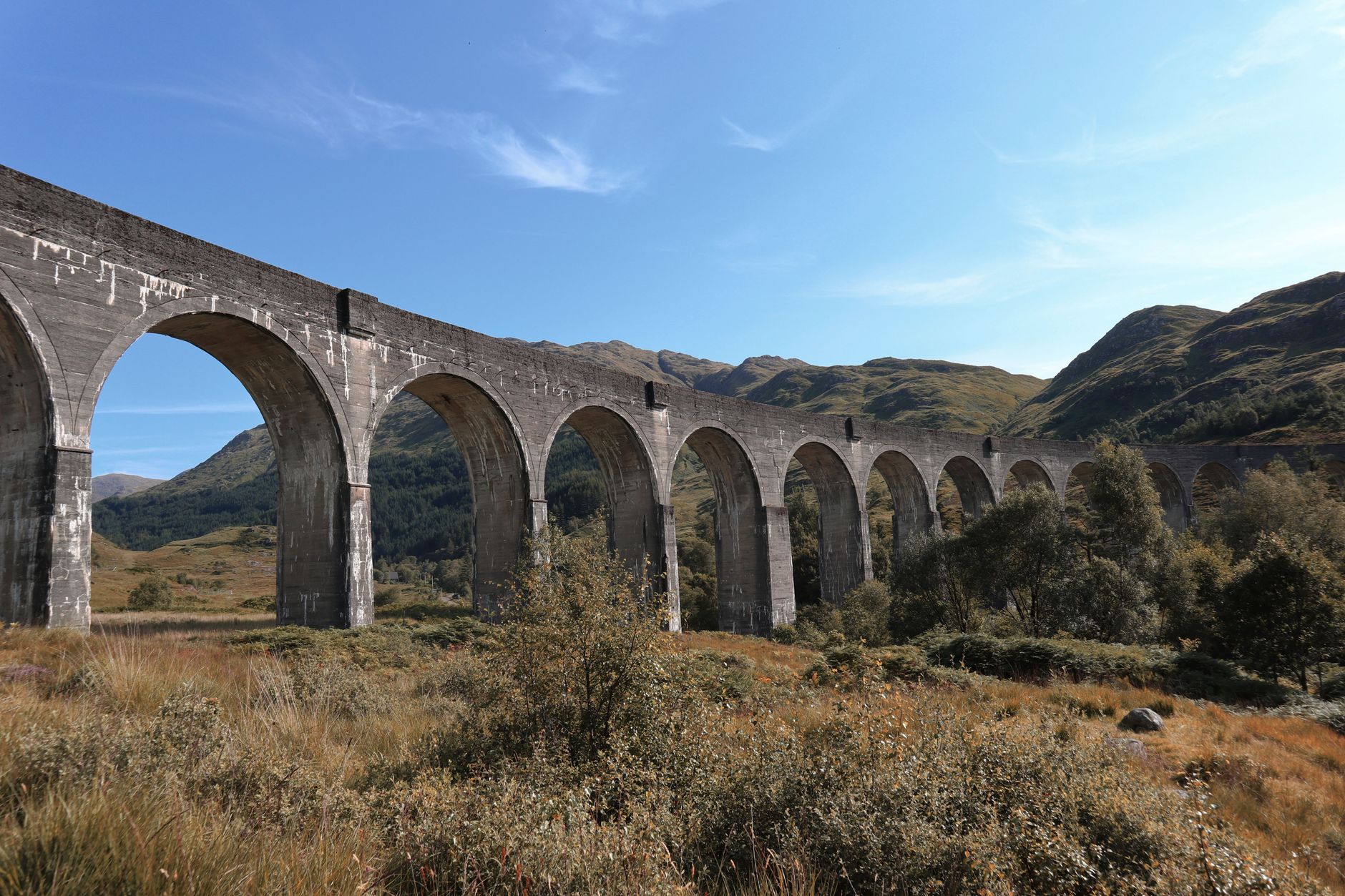
If I had to pick one single route and take it every summer for the rest of my life, it would be the West Highland Line from Glasgow Queen Street to Mallaig. The full journey takes around five and a half hours, and every single one of those hours earns its keep. You’ll pass Loch Lomond in the early stretch, then climb into open moorland that feels ancient and vast, before crossing the Rannoch Moor, one of the most desolate and beautiful places in the British Isles. Then comes the Glenfinnan Viaduct, which you’ll recognise immediately whether or not you’ve ever read a word about it, because it’s one of those views that just stops you dead. The steam-hauled Jacobite runs seasonally over this route if you fancy turning the spectacle up several notches, though standard ScotRail services give you the same views for a fraction of the price. Book early, grab a window seat on the right-hand side heading north, and bring a proper flask of something warm.
The Settle–Carlisle Railway: England’s high-level wonder
The Settle–Carlisle is 72 miles of pure drama. Running across the Pennines through some of England’s most rugged terrain, it crosses 14 viaducts and passes through 14 tunnels, with the whole line sitting at high elevation for much of its length. Ribblehead Viaduct is the headline act, a breathtaking Victorian structure that still makes civil engineers a little emotional, and quite rightly so. The surrounding moorland stretches in every direction, and on a clear summer’s day the light across those hills is something I find genuinely hard to describe without sounding theatrical. Trains run from Leeds to Carlisle, and the journey takes just over an hour and a half. That said, I’d suggest breaking the trip at Settle or Ribblehead and walking for a while before catching the next service. The timetable is generous enough to allow it.
The Cambrian Coast Line: Wales at its most wild
Running from Machynlleth to Pwllheli along the edge of Cardigan Bay, the Cambrian Coast Line is wildly underrated. The track hugs the shoreline so closely in places that you feel as though the sea might actually lap in through the doors. Barmouth Bridge, a wooden railway viaduct stretching over the Mawddach Estuary, is one of the most dramatic railway structures in Wales, and the views across the estuary and up into Snowdonia on a bright day are genuinely jaw-dropping. This line is also brilliantly accessible by Ranger and Rover passes, which let you hop on and off at leisure. If you’re already planning coastal walking in the region, wandering some of Wales’s most beautiful gardens and landscapes makes a perfect companion day trip.
The Kyle Line: Inverness to the edge of the world
The Kyle of Lochalsh line runs 82 miles from Inverness out to the western coast of the Scottish Highlands, and it consistently appears on lists of the world’s great rail journeys for very good reason. Loch Carron is the highlight for many passengers, a sea loch whose colours shift from slate grey to a vivid turquoise depending on the light and the season. Summer is the prime time to travel, when the heather is just beginning to colour the hillsides and the long evenings mean you arrive at Kyle of Lochalsh in glorious golden light. From there, Skye is just across the bridge.
How to book cheap off-peak tickets
The most scenic train journeys UK has to offer don’t have to cost a fortune. Here’s what I’ve learnt from years of booking rail trips on a budget. First, Advance fares are almost always the cheapest option and they go on sale up to twelve weeks before travel. Set a reminder and book the moment they drop. Second, travelling off-peak, meaning after 09:30 on weekdays and most of the day at weekends, unlocks significantly cheaper ticket prices on many routes. Third, Railcards are quietly one of the best-value products in British travel. The 16-25 Railcard, the Two Together Railcard, and the Senior Railcard all give 33% off most fares. The National Rail website lets you compare options and check which Railcard saves most on a given journey. Fourth, split ticketing, buying two or more tickets for different sections of your journey rather than one through ticket, can halve the cost on longer routes. Apps like Trainline or Railsplit do the maths for you automatically.
What to pack for a scenic rail trip
A good scenic rail day really does reward a bit of preparation. I always bring a reusable water bottle, a window seat reservation (book this at the same time as your ticket on longer routes), a pair of compact binoculars for wildlife spotting, and something decent to eat because buffet car prices are, let’s say, enthusiastically optimistic. If you’re combining a rail journey with a proper summer day out, you might find inspiration in our ideas for brilliant UK staycations on a tight budget or even ideas for planning your broader summer itinerary.
The best time of year to travel these routes
Summer is undeniably the prime season for the most scenic train journeys UK offers, particularly in Scotland and Wales, where the light stays long and the landscape is lush. June to August gives you the longest days, the best chance of clear skies, and the fullest timetables. That said, autumn brings its own extraordinary colour to the West Highland Line and the Settle–Carlisle, so September and October are worth considering if you can dodge the school holiday pricing. Spring is quietly brilliant too. The West Highland Line in May, with the hills just greening up and the burns running full, is something I genuinely look forward to each year. Whatever season you choose, the window seat awaits. Go and look at your own country properly. It is very, very good.
Leave a Reply